

IRAN: AUTHORITIES SEEK TO SEIZE OLDEST PROTESTANT CHURCH BUILDING IN “FUTILE SYMBOLIC MOVE”
A historic Christian compound in Tehran, which was established in 1876 and is home to Iran's oldest Protestant church building, is facing possible confiscation by the country's government. But according to Voice of the Martyrs Korea Representative Dr. Hyun Sook Foley, the action is a “futile symbolic move” which, while unfairly punishing the small number of Christians who still worship and live there, is unlikely to slow the rapid spread of Christianity across the country.
“The Protestant population in Iran is widely considered one of the most vibrant and fastest growing in the world, and Iran’s government has been completely unable to stop the spread,” says Representative Foley. “The seizure of the St. Peter Evangelical Church is a futile symbolic move by the Iranian government which punishes the small handful of Christians who still worship there, in a blind effort to strike a blow back at the country’s mushrooming Protestant population, which has grown from a few thousand in 1979 to between 800,000 and 1.2 million today.”
Representative Foley notes that nearly all of Iranian Protestants already meet in homes and other underground locations because of government bans on open Christian worship. She calls a statement by the World Council of Churches protesting the recent high-profile seizure of church buildings by the Iranian government “misguided and wrongly focused.”
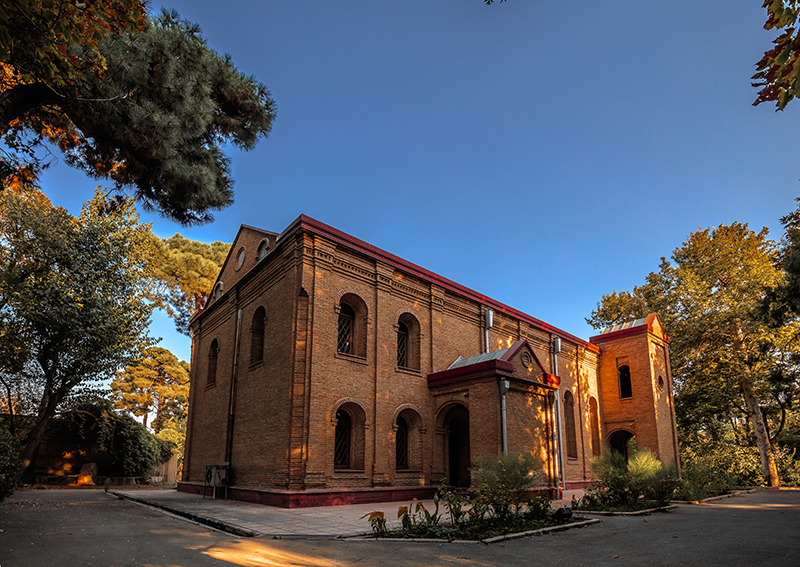
t. Peter Evangelical Church (Photo: Wikipedia / Herbert Karim Masihi (CC))
“The statement by the World Council of Churches (WCC) calls for the protection of the historic church buildings in Iran, but it omits the two things of greatest importance: First, it does not mention that the church in Iran as one of the fastest growing Christian communities in the world. As a result, it gives the false impression that Christianity is an ancient, disappearing minority there. Second, it does not call on Iran to stop persecuting the underground Christians themselves, or to release the more than 250 Christians in Iran who are estimated to be in prison simply for their faith. This should be the focus of the WCC’s statement and its efforts.”
St. Peter Evangelical Church was built by American missionaries on 10 hectares of land granted by the King of Persia. The compound now consists of a church building, two schools and dozens of residential homes. In 1998, authorities ordered that the land be transferred to the Islamic government, along with several other church properties across the country. However, the ruling was not enforced at that time. In 2008, Iran’s Council of Evangelical Churches learned of the decision and protested, but all appeals were ultimately rejected.
Recently, governing authorities ordered 20 families living on the property to vacate their homes within two weeks. Members of the congregation have also been informed that they must find another church to attend.
Representative Foley says that the government’s attempted seizure of the property is unfair to the small community of Christians who live and worship there, but that she is concerned that reporting on the incident has actually aided the government, not the Protestant community.
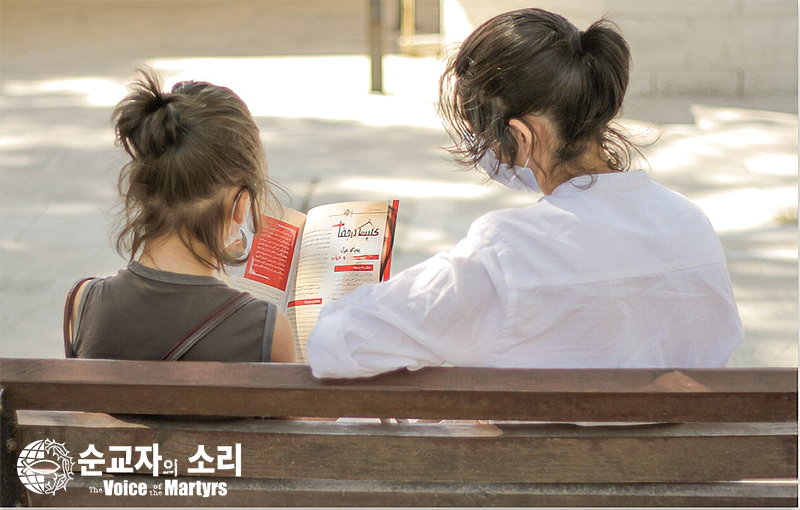
An Iranian Christian shares a Christian resource with a friend on a public bench. (VOM file photo)
“News reports even from Christian media have described St. Peter Evangelical Church as ‘one of the last remaining Protestant congregations in the city’. That is factually incorrect. There are thousands of thriving Protestant congregations throughout Tehran and around the country, but they meet in homes, not old buildings. The reporting makes it sound like the Iranian government has been successful in its efforts to eradicate Christianity. But nothing could be further from the truth,” she says.
Representative Foley says she believes it is important for Christians in the rest of the world to understand the full story of Iranian underground Christians when they read news reports on the government’s anti-Christian activities. She says her organization is currently preparing its September newsletter about the spread of the gospel in Iran and the Middle East and has released a book about Iran’s underground Christians entitled “Iran: Encounter with Hope.” “It’s the story of Iranian Christians who steadfastly maintain their faith, discovering hope in Jesus Christ even amidst the chaos of falling bombs and government threats,” says Representative Foley. The book is available for order through the organization’s website or by calling the organization.
“Even in the midst of intense persecution, Iranian Christians have never gone into hiding,” says Representative Foley. “They are not a dying minority. They have rarely ever meet in buildings. They have been in homes and even in the streets for years—not protesting for their rights but making a bold witness for Christ. They lack political freedom but have freedom in Christ, and they have used this freedom to evangelize, even when it has resulted in them being sent to prison. So we should pray that the Iranian government does not carry out its plan to seize the St Peter’s Church building. We should pray for the Christian families who are affected. But if the government does continue to seize old church buildings, we know that it will only make the Iranian church even harder to stop by moving them completely out of old buildings and into homes and streets across the country, joining the majority of Protestants who already worship there.”
Individuals interested in learning more about the work of Iranian underground Christians can visit Voice of the Martyrs Korea’s country profile on Iran at https://vomkorea.com/en/country-profile/IRAN/.